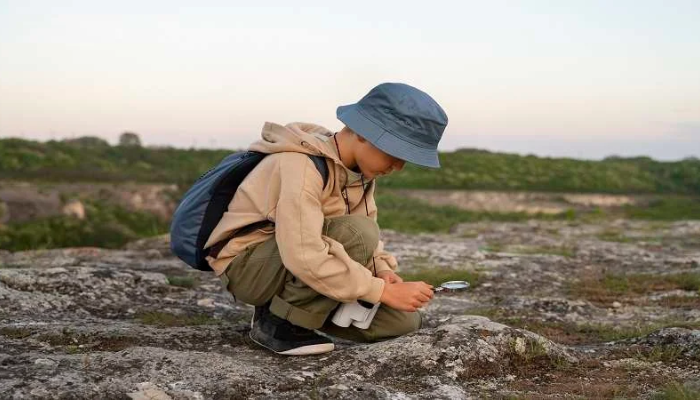
Daskusza exploration is an emerging term capturing the curiosity of researchers, adventurers, and thinkers who seek to understand the unexplored layers of human discovery and imagination. As interest in this mysterious concept grows, people are increasingly turning toward it as a framework for innovation, creativity, and deep observation. Whether you consider it a philosophical approach, a scientific mindset, or a symbolic journey, daskusza exploration reflects the desire to dive into the unknown and uncover insights that others often overlook.
More than just a conceptual idea, daskusza exploration represents a shift toward intentional discovery—an effort to examine hidden dimensions of environments, stories, and experiences. From cultural interpretations to psychological meaning-making, this fascinating term encourages individuals to view the world through a more curious, analytical, and artistic lens. In the following sections, we break down the essence of daskusza exploration, the methods behind it, and why it has become a trending topic among creative thinkers.
Understanding the Foundation of Daskusza Exploration
Daskusza exploration begins with the acknowledgment that discovery is not simply about reaching new destinations; it is about reshaping the way we perceive what is already around us. The foundation of this concept lies in recognizing the multi-layered nature of knowledge—where surface-level observations are only stepping stones to deeper understanding. By embracing daskusza exploration, individuals shift from passive discovery to active engagement, allowing them to uncover hidden meaning in even the most ordinary experiences.
At its core, daskusza exploration encourages curiosity-driven investigation. Instead of relying solely on familiar patterns or established frameworks, it invites explorers to rethink assumptions and challenge traditional pathways. This makes it an invaluable mindset for areas such as research, creative practices, cultural studies, and psychological inquiry. As a result, the foundation of daskusza exploration becomes not only a method of discovery but a philosophy for thinking differently.
The Cultural and Historical Roots of Daskusza Exploration
Though the term may appear modern, the essence of daskusza exploration is deeply rooted in centuries-old traditions of inquiry and discovery. Historically, cultures across the world have practiced forms of deep exploration to unravel natural mysteries, understand human behavior, and document unseen realities. Whether through storytelling, ancient documentation, or symbolic rituals, societies developed their own versions of daskusza exploration long before it had a name.
Culturally, the idea of exploring beyond the obvious reflects humanity’s long-standing fascination with mystery. Tales of mythical lands, hidden knowledge, and forgotten histories often embody the principles of daskusza exploration. By studying these global narratives, we recognize that this concept is not limited to one region or culture—it is a universal calling to push boundaries and uncover truths that lie beneath the surface. Today, this cultural heritage enriches the modern understanding of daskusza exploration, making it more relevant than ever.
Techniques and Methods Behind Effective Daskusza Exploration
To engage in daskusza exploration effectively, individuals must follow structured yet flexible techniques. One of the core methods involves layered observation—the practice of revisiting the same environment, subject, or idea multiple times from different angles. This approach helps reveal patterns, connections, and details that often go unnoticed. By applying layered observation, explorers cultivate a heightened awareness that leads to more meaningful insights.
Another essential technique in daskusza exploration is integrative analysis. Rather than isolating information, this method encourages the blending of emotional, cultural, scientific, and experiential data. Through integrative analysis, explorers build a more holistic understanding of their subject matter, making the process richer and more transformative. Practitioners often combine journaling, sketching, mapping, or conceptual modeling to deepen their analytical approach, allowing creativity and logic to work together harmoniously.
Modern Applications of Daskusza Exploration in Today’s World
In today’s fast-paced and interconnected society, daskusza exploration has found new and compelling applications. Educators use it to develop inquiry-based learning systems that help students think critically and independently. This method encourages learners to ask meaningful questions rather than simply memorizing answers. As a result, education becomes a more dynamic and personalized experience, empowering students to become lifelong explorers.
Beyond education, daskusza exploration also shapes modern research, creative industries, and personal development. Innovators apply it to design products, solve problems, and generate fresh ideas. Artists and writers use it to develop layered narratives and emotionally rich compositions. Even in personal growth, daskusza exploration encourages individuals to better understand themselves by analyzing emotions, motivations, and life experiences from multiple angles. Its versatility makes it a powerful tool in nearly any field.
The Future of Daskusza Exploration and Its Expanding Influence
As global interest continues to rise, the future of daskusza exploration appears rich with potential. Advancements in technology—such as digital mapping, virtual environments, and augmented reality—may enhance the way we engage in deep discovery. These tools allow modern explorers to visualize connections, uncover hidden layers, and simulate possibilities previously beyond reach. By integrating technology with curiosity-driven exploration, we can unlock even more profound discoveries.
Moreover, the concept of daskusza exploration is expected to influence collaborative projects, interdisciplinary studies, and global conversations about innovation. As more people adopt this exploratory mindset, communities will benefit from shared insights and more creative problem-solving approaches. The future may see daskusza exploration emerge as both a professional framework and a personal philosophy, guiding individuals and societies toward deeper understanding and purposeful discovery.
Conclusion
Daskusza exploration is more than a concept—it is a transformative approach to understanding the world and ourselves. By encouraging deeper observation, cultural awareness, creativity, and analytical thinking, this exploration style opens doors to richer insights and more meaningful discoveries. Whether applied to intellectual pursuits, artistic expression, or personal growth, it provides a powerful lens through which we can approach the unknown. As interest in daskusza exploration expands, it continues to inspire individuals to ask better questions, challenge assumptions, and embrace the beauty of curiosity-driven discovery.
FAQs About Daskusza Exploration
1. What is daskusza exploration?
It is a method and mindset focused on deep, layered discovery that encourages exploring beyond surface-level understanding.
2. Where did the concept originate?
While the modern term is contemporary, the principles behind it draw from historical and cultural traditions of deep inquiry.
3. How does daskusza exploration differ from regular exploration?
It emphasizes multiple layers of observation, integrative analysis, and curiosity-driven investigation rather than simple discovery.
4. Who can practice daskusza exploration?
Anyone—researchers, students, artists, thinkers, and even casual explorers.
5. Why is daskusza exploration becoming popular?
Because it promotes creativity, critical thinking, and deeper understanding in a world filled with rapid information.
6. Is daskusza exploration a scientific method?
It is not a formal scientific method, but it can complement scientific research through analytical and reflective approaches.
7. How does it benefit personal development?
It encourages self-reflection, awareness, and the ability to see experiences from multiple perspectives.
8. Can it be used in education?
Yes, many educators use daskusza exploration to promote inquiry-based learning and student-driven discovery.
9. What tools aid in this exploration?
Journals, sketchbooks, conceptual models, digital tools, and reflective practices.
10. What is the future of daskusza exploration?
Its influence is expected to grow across creative fields, technology, research, and personal growth as more people adopt its principles.
About the Author