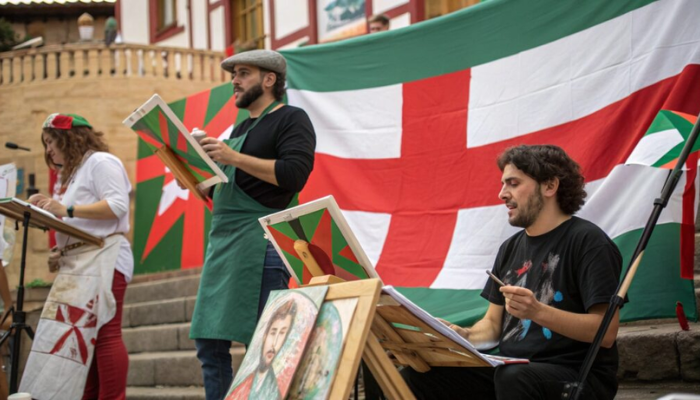
basqueserpartists is a term that captures more than a political stance—it reflects centuries of identity, resilience, and cultural preservation in one of Europe’s most distinctive regions. Rooted in the Pyrenees between Spain and France, the Basque people have long stood apart through language, customs, and a powerful sense of belonging. Over time, this unique identity gave rise to movements seeking autonomy or independence, shaping what many now refer to as basqueserpartists.
Understanding basqueserpartists requires moving beyond headlines and stereotypes. It involves exploring ancient origins, linguistic heritage, shifting political realities, and the modern evolution of self-determination in a globalized world. This article offers an in-depth, SEO-optimized exploration of basqueserpartists, examining how history, culture, and contemporary politics intertwine to form one of Europe’s most compelling identity narratives.
Origins and Identity of basqueserpartists
The roots of basqueserpartists stretch back thousands of years, long before modern nation-states existed. The Basque people are often described as one of Europe’s oldest continuous cultures, with genetic and linguistic features that predate Indo-European migrations. This deep historical continuity fostered a powerful sense of distinction. As surrounding regions evolved under Roman, Visigothic, and later Spanish and French rule, Basque communities retained local governance traditions known as fueros, reinforcing autonomy as a way of life rather than a political slogan.
Basqueserpartists emerged from this enduring identity. Rather than being born solely from political ideology, the movement reflects a cultural instinct to preserve uniqueness in the face of centralization. Industrialization in the 19th century, followed by political upheavals in Spain and France, intensified this awareness. As national governments sought uniform laws, language, and administration, many Basques felt their ancient customs were being diluted. The response was not merely resistance but the articulation of a modern identity movement grounded in heritage, language, and regional pride.
Historical Timeline and Key Moments
The modern story of basqueserpartists begins in the late 19th century with the rise of Basque nationalism. Thinkers like Sabino Arana articulated a political vision that framed Basque identity as distinct from Spanish and French frameworks. This period coincided with the erosion of traditional rights after the Carlist Wars, when central governments curtailed regional privileges. For many Basques, these losses symbolized an existential threat, transforming cultural preservation into political action.
The 20th century intensified these dynamics. During the Spanish Civil War and the subsequent Franco dictatorship, Basque language and symbols were suppressed. This repression shaped generations, making identity inseparable from resistance. While some elements of basqueserpartists adopted radical methods, others focused on cultural revival and political participation. The return of democracy in Spain introduced autonomy statutes, granting significant self-governance. These changes redefined basqueserpartists, shifting emphasis from confrontation toward institutional politics, regional development, and cultural renaissance within democratic frameworks.
Culture, Language, and the Role of Euskara
At the heart of basqueserpartists lies Euskara, the Basque language. Unlike any other in Europe, it stands as a linguistic island, unrelated to neighboring tongues. For centuries, Euskara was primarily oral, used in rural communities while administration operated in Spanish or French. Suppression during authoritarian periods further endangered its survival. Yet language revival became one of the most powerful tools for identity, turning education, media, and daily life into arenas of cultural renewal.
Basqueserpartists often emphasize culture as much as politics. Traditional sports, dance, gastronomy, and festivals reinforce communal bonds and regional pride. These cultural expressions function as living heritage rather than museum artifacts. In modern Basque cities, contemporary art and technology coexist with ancient customs, demonstrating that identity is not static. For many, preserving culture is as vital as seeking political change. This blend of tradition and innovation defines basqueserpartists as guardians of heritage and architects of a modern regional identity.
Politics, Autonomy, and Modern Strategies
Today, basqueserpartists operate primarily within democratic systems. The Basque Autonomous Community in Spain enjoys one of Europe’s most extensive self-governance frameworks, including fiscal independence. This arrangement transformed the movement’s priorities. Rather than focusing solely on separation, many groups now emphasize economic development, social policy, and linguistic normalization. Autonomy has become both a platform and a proving ground, showcasing how regional governance can coexist within larger states.
Modern basqueserpartists strategies revolve around institutions, education, and international engagement. Political parties advocate varying degrees of sovereignty, from enhanced autonomy to full independence, but the discourse largely unfolds through ballots and public debate. This evolution reflects broader European trends, where regional identities seek recognition without dismantling democratic stability. Basqueserpartists illustrate how movements rooted in history can adapt, replacing confrontation with negotiation and cultural resilience with policy innovation.
Global Perception, Myths, and the Future
Internationally, basqueserpartists are often framed through simplified narratives. Media portrayals sometimes focus on past conflicts, overshadowing contemporary realities of peaceful political engagement and cultural revival. This narrow lens obscures the diversity within the movement, which spans educators, artists, entrepreneurs, and public servants. The modern Basque region ranks high in quality of life, innovation, and social cohesion, challenging outdated images of perpetual unrest.
The future of basqueserpartists will likely be shaped by globalization, digital culture, and shifting European dynamics. Younger generations navigate dual identities, embracing both Basque heritage and global citizenship. This does not weaken the movement; instead, it redefines it. Identity becomes inclusive rather than insular, forward-looking rather than defensive. Basqueserpartists may increasingly focus on sustainability, technology, and cultural diplomacy, ensuring that an ancient people remain vibrant in an interconnected world.
Conclusion
Basqueserpartists represent far more than a political aspiration. They embody a dialogue between past and present, between local roots and global horizons. From prehistoric origins to modern autonomy, the Basque story reveals how identity evolves under pressure, adapting without dissolving. Language, culture, and governance intertwine to form a living narrative of resilience.
Understanding basqueserpartists requires empathy for history and openness to complexity. It is a story of preservation without stagnation, of self-determination shaped by democratic values. As Europe continues to redefine borders of belonging, the Basque experience offers insight into how ancient identities can thrive within modern frameworks, proving that heritage and progress need not stand in opposition.
FAQs About basqueserpartists
1. What does “basqueserpartists” mean?
It refers to movements and individuals advocating greater autonomy or independence for the Basque region based on cultural and historical identity.
2. Where are the Basque regions located?
They span northern Spain and southwestern France, centered in the western Pyrenees.
3. Is Euskara related to other European languages?
No. Euskara is unique and predates Indo-European languages.
4. Are basqueserpartists only political activists?
No. The term includes cultural leaders, educators, artists, and community members preserving Basque identity.
5. Do all Basques support separation?
No. Opinions vary widely, from strong independence advocacy to satisfaction with autonomy.
6. How has autonomy changed the movement?
It shifted focus toward governance, education, and economic development within democratic systems.
7. Is the movement still active today?
Yes. It continues through political parties, cultural initiatives, and public debate.
8. How does culture influence basqueserpartists?
Culture is central, with language, traditions, and festivals reinforcing identity.
9. Are basqueserpartists unique in Europe?
They share similarities with other regional movements but stand out due to ancient origins and a distinct language.
10. What is the future of basqueserpartists?
The future lies in balancing heritage with innovation, shaping identity within a globalized world.
About the Author